This is why I run.

My name is Lyndsay and I ran the Chicago marathon on October 9, 2011 and here I am five years later, running the Bank of America Chicago Marathon on October 9, 2016. Five years later.. not much has changed.

Five years later – 

There continues to be a misunderstanding of the differences between Type 1 and Type 2 diabetes. FACT: Running and living an active lifestyle will not reverse my diabetes; in fact, it can make managing it even more challenging. Type 1 diabetes is an auto-immune disorder, that can strike at any age. (I happened to be three years old…)
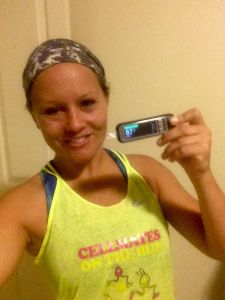
lyndsay

Me after running 20 miles!

Type 1 diabetes continues to be un-preventable and un-curable. Those with Type 1 must take insulin by injections or insulin pumps to stay alive. Hours without this hormone can lead to death. Too much of it, can also lead to death.


Type 1 diabetes continues to be an emotional burden on individuals and their families.

Type 1 diabetes continues to be a cost burden. Insulin, healthcare visits, testing supplies, durable medical equipment (insulin pump and continuous glucose monitors) for those that are blessed to have insurance even cover it in the first place…the list goes on.

Technology continues to evolve; however, the minute to minute needed self-care remains the same. Type 1 is full-time job, that no one applies for and no one wants. If you get the job, you can’t turn it down, and there is no pay, no vacation time, and no matter how bad it gets you can’t quit.

Five years later, I continue to work as a diabetes educator, each day celebrating the victories of those I work with, and encourage and comfort those that are frustrated, exhausted, and scared. Those that I have met continue to remind me daily, why I do what I do.

I continue to not let diabetes define me, and do my best to inspire others living with diabetes to see that it does not need to prevent one from reaching goals, specifically athletic goals.

“We are only controlled by what we think our limitations are.”

A quote I recently saw that I hope those with and without diabetes stir and energize…

In less than two weeks I will be participating in the Chicago Marathon, amongst thousands with various motivation/purpose for running. I am running to help raise funds for the Chicago Diabetes Project, whose focus is research for islet cell transplant therapy (cells that make insulin.) I run to continue to encourage this special family of mine, others like me to live with courage, persistence, grit and guts.

-Lyndsay


Team Cellmates on the Run is the official charity endurance team of the Chicago Diabetes Project. Individuals, many who are affected by diabetes or have diabetes themselves, train to complete a marathon or triathlon while raising funds to support diabetes research and a functional cure. 

To make a donation to support a Team Cellmates on the Run participant just like Lyndsay visit https://secure.e2rm.com/registrant/startup.aspx?eventid=191898.

To learn more or sign up for a 2017 event visit us online at www.cellmatesontherun.com

Bernie’s Diaversary: our family tradition

Next month, on Wednesday, October 5th we will recognize the 6th anniversary of my son’s diagnosis with type one diabetes.

In the diabetes community, we call this day our diaversary.

Six years ago, on October 5, 2010, we discovered Bernie was sick and that he was going to be sick for the rest of his life.

Back then I knew, days before, that he had diabetes.

My son who had taught himself to use the potty at 18 months and who never had an accident was wetting the bed. His cheeks were gaunt and his limbs flapped in their sockets when I picked him up. He was manic about water and food and listless about play. Still, on that day, I was hoping it was a kidney infection, maybe? or a urinary tract infection, probably. We’d get a round of antibiotics, something I never allowed, and be then be done.

On October 5, 2010 we got the diagnosis and our lives changed forever.

Bernie has type one diabetes. That means his pancreas doesn’t produce insulin. Because of this, at every eating occasion, we count carbs and administer insulin. Because of this at every playing, driving or sleeping occasion, we test blood glucose levels. We celebrate his diaversary because when insulin and blood glucose testers came into our lives, Bernie got better. He gained weight, he slept through the night, he played.

Here’s Bernie describing diabetes for his school science project. Bernie was five when we made this video. He picked his nose more often back then.


Those outside of the diabetes community don’t know that insulin and blood glucose testers are not a cure. We keep Bernie alive with these things. Every day and every time he eats, sleeps, runs, plays, we monitor his blood glucose to make sure he’s safe.

We make sure he’s safe because a lifetime of high blood sugars makes diabetes the number one cause of blindness, kidney failure and limb amputation and also because one bad low blood sugar can be fatal.

img_1898

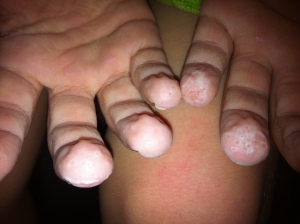
Bernie’s fingers due to constant testing

We were determined not to mourn this anniversary, the date of his diagnosis. So on his first diaversary in 2011, we began a family tradition, each family member passed to the other a healthy gift – me to daddy, daddy to Bernie and Bernie to, his sister, Ada. In this way, we’d act like insulin, sharing something healthy from body to body. Last year, Bernie woke up the morning of the anniversary of his diagnosis and announced, “Yay! Today’s diabetes day!” We had a nice time of it. I got vitamins and a loofah. My husband, Steve, got chocolate and beer, because that’s what’s good for him. The kids each got active, outside toys.

This simple tradition healed our anger, our grief and us. We were able, after our first diaversary in 2011, to look beyond what we can make real in our little family to what we can do for the diabetes community as a whole.

Today, we take on the added tradition of looking forward, toward a cure, as well as looking back, to that day that changed our lives forever. Today, I sit on the board of the Chicago Diabetes Project (CDP), a global community of researchers, physicians and Universities [http://www.chicagodiabetesproject.org/] working toward a functional cure for people, like Bernie, whose lives depend on insulin.

Did you know that cure research is dramatically underfunded?

The CDP, and others working toward a cure need funding to complete clinical trials. In fact, from a survey of the landscape from the Juvenile Diabetes Cure Alliance, as little at 7% of funds raised are allocated to cure research.

Why am I writing to you about this?

Because, we, the community around the CDP, can change this reality today. Let’s use our diaversary to reach out to our friends and family to help us realize the goal of a functional cure for diabetes. With your help, we can make this goal reality.

-JANI

I have. Have you?

Organ donation is goodly. You know it. I know it.

There are almost 100,000 people in the Unites States alone waiting for life-saving organ transplants. I’m talking life saving, not life altering like tissue, and cornea (and islet) transplants that improve quality of life rather than save it.

Two years after my islet transplant, my sister died waiting for a liver. She waited three years before she was told she was too sick to survive surgery and was taken off the transplant list. I think the day she was removed from the list was harder for me than the day she died because I just kept thinking the same thing over and over. What if more organs were available? Would she have been transplanted and survived?

At this point, what if’s don’t mean a thing unless I do something about it so someone else doesn’t have to live with what if. The more people that register as organ donors, the more livers, hearts, and islets are available to save and improve lives, so I have to ask:

Have you registered as an organ donor yet?

If you haven’t, you should.

It will do your karma good.

Btw, if you’re in the United States you can find your state’s registry here.

Thank you.

-Amy
Insulin-free since 2006

Back to School

IMG_4432

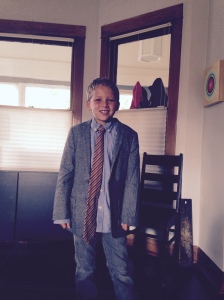
Bernie is ready for school!

The back to school time of year is upon us. For those of us with school-aged children, that means buying new sneakers, folders and number two pencils. For a parent of a school-aged diabetic child, this time of year also means training a new teacher about safe blood glucose levels, and adjusting to a new blood glucose testing schedule and a new regimen for meals and snacks.

For parents of children with diabetes, this time of year also means splitting our supplies in half to secure a store of sugar tabs, lancets, insulin and test strips at the school nurse’s office. It’s going to be a tight month for us. Our test strips will run out before we can renew our prescription, and we’ll just eek out a last insulin pump change from our allotted amount of insulin.

As parents of a child with type one diabetes, every month we run out of the supplies we need to keep our son alive. And now, with the cost of insulin on the rise, every month means more money going out. We’re lucky. We have good, employer-provided insurance. I think about those who are less fortunate all the time and wonder how they manage.

Innovations in healthcare and advances in procedures and techniques are considered entrepreneurial efforts, not a public service. In today’s environment, could we discover and bring to market a diabetes cure with the efficiency and momentum with which Canada introduced insulin 100 years ago?

I wonder.

The Chicago Diabetes Project has a proven functional cure. We know it works—what we need is the momentum that money can provide. With your support Dr. O says we will have the testing and the practice in place to make this procedure part of the medical formulary and available to all who qualify.

Let’s make this day happen. Let’s take this school year and really learn something. Let’s make a functional cure through the Chicago Diabetes Project a reality sooner rather than later.

-JANI

Days like today

On days like today I have a difficult time thinking of things to blog about.

I get up in the morning and take my meds – it’s just routine. I don’t take time to think about why I’m taking them or what it means. I don’t even consider checking my blood sugar. I get up, I go to work, and I kind of take my health for granted. On days like today life is mundane, and there isn’t a whole lot going on in the portion of my brain that thinks about diabetes, doctors, and islet cell transplants. It doesn’t make for exciting blog post, but I have to admit that I sort of like days like today. Being free of managing diabetes is, after all, the main point of this journey, isn’t it?

Amy
-Insulin free since 2006

How having my islet transplant saved me from cancer.

When I had my transplant, I had a hematoma (bleeding) on my liver. I’m often reluctant to write about it because I don’t want people considering an islet transplant to reconsider based on just my story. I’d do it all over again, but I’m going to be honest here. It hurt. It hurt a lot, and as far as I know it wasn’t even a very large hematoma. It was just pushing on things that, well, hurt. It made taking a deep breath difficult, and I joked that every time I ate and my stomach expanded, my liver hurt. I was also anemic. I had a blood transfusion, a CT-scan and a bunch of ultrasounds to monitor it, but not much else needed to be done.  It just needed time to heal.  I was in the hospital for a week and then my partner and I stayed in the Chicago area for a few weeks before going home.

In 2006,  I was living in an apartment that had plenty of electrical outlets in the hallway, but not enough in any other room so we frequently charged electronics in the hallway. A few weeks after I got home I was walking down said hallway when an electrical cord reached out, wrapped itself around my ankle and tripped me. Of course it happened that way. I was totally paying attention to my surroundings. You can believe me because when I landed, I landed directly on my liver. I didn’t try to stop myself, I didn’t curl up and try to protect my already sore abdomen,  and I didn’t do anything to prevent injury. Nope. I just fell flat forward. I was relieved that I didn’t hit anything hard with my face, but I re-injured my liver. A few days later I was back in Chicago for a routine clinic visit (yeah, dummy here didn’t bother telling anyone I fell) and I was readmitted to the hospital. I don’t remember the exact number but my hemoglobin level was close to 5. (Normal for a female of my size is around 12.)

Just a side note – when you’re in the hospital and you’re pacing the floor because you’re bored, but “Your hemoglobin level is 5, get back in bed!,” nurses will FREAK out.

While I was admitted, I had multiple abdominal CT scans. During one of the scans they unintentionally scanned my chest and part of my neck. A few weeks after I got home, I was asked to come back for an ultrasound and needle biopsy of my thyroid. A nodule had been found on it, and it was uncertain what kind. The needle biopsy was also inconclusive, so it was decided that my thyroid should be removed. I had already had half removed 15 years before due to a benign tumor. I assumed the results would be the same.

When I had my thyroid gland removed and biopsied, there was a benign tumor. There was also a small amount of cancer.  My entire thyroid was now gone so there was no need for further treatment.  Since then I’ve have regular blood work and neck ultrasounds to make sure it hasn’t returned. I was diagnosed and cured all in one day.

Maybe my liver hematoma experience wasn’t fun, but as a result I think I might have one of the easiest cancer stories ever.

-Amy
Insulin free since 2006

Let me tell you a secret.

I haven’t told many people this. Honestly, I think maybe one or two people know. The reason I haven’t said anything is because even I think it’s a bit odd. For the first six months or so after I had my islet cell transplant, I slept with my insulin pump. It wasn’t connected. I didn’t have insulin in it, or even a battery, but there it was tucked under my pillow like a security blanket. I think that’s exactly what it was.

I had my pump with me 24/7 for four years before my transplant. It went everywhere I went. I never took a break. I rarely disconnected it for more than an hour. It was a part of me, so when I no longer needed it I didn’t know how to wrap my brain around the fact that it was gone. If someone said to you, “You don’t need your lungs anymore,” I’m pretty sure you’d think, “Wait, yes! I do need those to survive!”  Well, I’d been told for 25 years that I needed external insulin to survive and my pump was the thing that provided it. I was not prepared to lose that piece of myself that identified as a pump wearing, insulin dependent, type 1 diabetic.

I appreciate not needing insulin. Right after my transplant, I felt happy because I didn’t need my pump, but it took me some time to get used to not feeling chronically ill. Once I adjusted to the immune suppression meds and felt well again, I didn’t know how to be normal. You see, I didn’t know what normal felt like physically or emotionally. For a while, things were a bit confusing for me. I never expected to feel an emotional loss for a disease I desperately wanted to get rid of for as long as I could remember. Diabetes and all the emotions that came with being a diabetic had been so familiar to me for so long time that I didn’t know how to let it go. Eventually, I got used to not worrying when my next low or high blood sugar was going to hit me over the head. I realized that feeling thirsty might mean that I needed a drink of water and not a few units of insulin. I had to be told more than once that even normal people get low blood sugar if they go out and exercise without eating. In short, I had to relearn what normal felt like. It was difficult to accept that normal was a part of my life now.

So after about six months of sleeping with it under my pillow, I put my pump in a small box of mementos that I’ve kept from my childhood, and I moved on. I know it’s still there, and I guess that’s good. Someday, if I ever need insulin again, I’ll take it out and look at it before ordering one that’s not 14+ years old. Even though I don’t think I’ll use it again, I doubt I’ll get rid of it. I keep it now not because it feels like a security blanket, but because it symbolizes a part of who I am and serves as a reminder of how far I’ve come.

-Amy
Insulin free since 2006

Normal tastes great!

Today, for breakfast, I had a giant fruit smoothie.  It had two bananas, a plum, a handful of grapes, a handful of black cherries and orange juice. To say it was high carb would be putting it mildly. I never would have eaten anything with that much fruit in it in one sitting before my transplant. I checked my blood sugar two hours later and it was 86. It still amazes me. I don’t think I’ll ever be one of those people who takes normal glucose control for granted. I will forever be grateful to everyone who helped “functionally cure” me from my type 1 diabetes.

To all the scientists, doctors and donors who helped me – thank you from the bottom of my liver. You’re the best!

-Amy
Insulin-free since 2006

How my islet transplant affected my vision loss

At age 25, I had diabetes for 15 years. In the 90’s staying on your parents’ medical insurance after college wasn’t an option, so I went a few years without medical insurance.  To say it was difficult is an understatement. I was working but uninsured. My employer provided insurance but back then if you had a pre-existing condition they could say you weren’t insurable, so I went without insurance. Nph and Regular insulin were both available over the counter so I used those. I didn’t have blood work done, and I didn’t go to the doctor. When I finally got a job with a company large enough to offer me medical insurance, I found a primary care physician, went to an endocrinologist and saw an ophthalmologist. He told me I had the beginning stages of retinopathy and cataracts. I was told they’d watch it, but nothing needed to be done yet.  By the end of that year it had gone from something that needed to be watched to proliferative diabetic retinopathy. I started having periodic laser surgeries to control it’s progression.

One morning, after having already had multiple laser surgeries, I woke up and couldn’t see out of my left eye. A blood vessel had broken and bled inside my eye partially blocking light and images from getting to the retina. A few months later, one blood vessel broke in my right eye. It was decided that I need to have a vitrectomy to remove the blood. The blood, part of the vitreous, and some scar tissue that had built up on my retina were removed from my left eye. The blood in my right eye was left to reabsorb on it own, and for the most part it did.

Over five years I had 23 eye surgeries. Two years later, I had cataract removal, one more laser surgery and then I was diagnosed with glaucoma. When I had my last laser surgery, I decided I was done. With each laser surgery I had, my eyes became more sensitive and it took longer to recover. My vision was continuing to get worse even with treatment and tight blood sugar control. I didn’t want to go through any more surgeries. I decided that I could live with low vision if it progressed to that point.

When I found the Chicago Diabetes Project and the islet transplant program at University of Illinois Hospital & Health Sciences Systems in Chicago, I wasn’t thinking about my vision. I had hypogylcemia unawareness and that was my biggest concern. Since I had my transplant though, my vision has stabilized. I won’t regain what was lost but it hasn’t gotten worse. The swelling in my retinas, which is common with retinopathy, is now gone.   The cataract in my right eye hasn’t gotten worse and neither has my glaucoma. In my 20’s I was told I’d most likely be blind by the time I was 40. I’m now 46 years old. I’ve got blind spots and I have a 90 degree field of vision when most people have 180, but most people I meet have no idea that I’ve had any vision loss. I can see, and I appreciate that so much.  Sometimes, it’s the things you don’t think about that sometimes impact you the most.

-Amy
Insulin-free since 2006

Summers without insulin

I’ve spent my entire life living in Michigan.  If you live near the great lakes then you’re never far from a river or a beach, and in Michigan you’re never far from a park with camping or woods with trails to hike.  Spending time outside is what has always defined summer for me.  I love the sun and the heat. I even like the ridiculous humidity we get here, but the things I like about summer can also be a source of frustration for people who take insulin.  It’s something you learn to deal with.

Having functional islets made me realize how much you learn to adapt when you’re on insulin and need to take it with you.  I started making a list of things I appreciate about having functional islets in summer, not all of them are heat-related.  Many of them apply to winter activities too, but summer is my favorite time of year, so for me, that’s when it applies most.

Here are my top 6:

  1. I no longer have a backpack full of medical supplies and snacks I bring with me to the beach, or hiking.  Well, I probably bring snacks, but I don’t HAVE to!
  2. I don’t need to bring ice packs along to keep insulin and pumps cool.
  3. There’s no more worrying about connecting and disconnecting an insulin pump every time I go swimming , and where do I leave this $5,000 piece of medical equipment while I’m out there?
  4. I don’t have to test my blood sugars every hour to make sure the extra activity hasn’t sent my blood sugar low.
  5. There is no more sweating until my infusion set doesn’t stick and needs to be changed or using duct tape as a last resort to make it last a few hours longer.
  6. My favorite is no longer feeling sick and exhausted from dehydrated because I’ve been out in the sun and my blood sugar is higher than it should be. That didn’t always happen, but when it did, it wasn’t fun.

I could go on all day, but I won’t because even with the added prep needed before my transplant,  I liked being outside in summer. I realized how much more I was going to enjoy it that first year after my transplant, when my partner and I got lost hiking in the woods and we didn’t have to worry about anything but finding our way home.

There are so many things to appreciate about being insulin free and I am so grateful for all the private donations that the Chicago Diabetes Project raises. Without these donations my transplant would not have been possible – right now the transplant procedures through the clinical trials and its research are fully funded by money the CDP raises. (So please support them!)

It’s usually the little things the average person doesn’t need to think about that I appreciate the most.

Amy
-Insulin free since 2006